







Search Results for: Grandpa doesn't brew tea

Grandpa Doesn't Make Tea closes multiple stores in succession, rapid expansion goals face real-world test
Recently, the new-style tea beverage brand Grandpa's Tea, originating from Wuhan, has been reported to have closed or withdrawn stores in multiple locations, including Zibo in Shandong, Suzhou in Jiangsu, and Poyang in Jiangxi, sparking consumer concerns about its business condition. The brand's co-founder had set an expansion target of at least 4,500 stores in 2025, striving for 5,000, but as of October 18, only 2,274 stores were in operation, a clear gap from the goal. Meanwhile, well-known tea brands like Xiamen's Sevenbus and Shenzhen's 813 Bayishan have also fallen into store closure controversies. In response to external doubts, Grandpa's Tea stated that adjustments to individual stores are normal optimization actions by franchisees and that overall operations are sound. This article will sort out the ins and outs of the incident, presenting the brand's response and industry background. [more…]
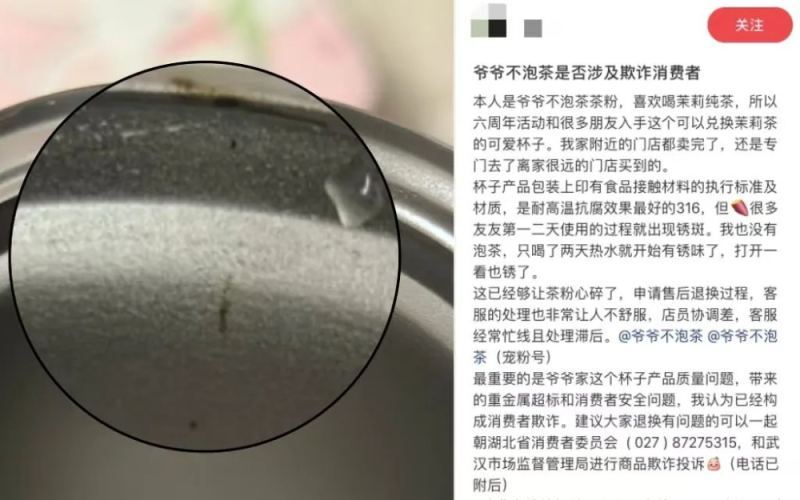
Grandpa Doesn't Brew Tea Limited Edition Insulated Cup Inner Liner Rusts; Official Recall Initiated After Testing, Cause Announced
The chain milk tea brand Grandpa's Tea launched a limited-edition garden thermos to celebrate its sixth anniversary, attracting many fans to collect the merchandise. However, some consumers discovered rust at the rim of the cup along with a strange odor after use, raising concerns about product quality. Multiple users posted about similar issues on social media, yet the after-sales handling failed to satisfy consumers. After media reports on October 22, the brand took the matter seriously, sent the product for testing, and released preliminary investigation results confirming that the metal inner liner was indeed 316 stainless steel, and that the rust was caused by the manufacturing process, after which it immediately initiated a recall of the affected batch of thermoses. Front Street Coffee reminds coffee lovers that when choosing a thermos, they should pay attention to material and craftsmanship details, and promptly defend their rights if they encounter quality issues. [more…]

A 17-yuan milk tea unopened but only half a cup? Grandpa's No Tea "no ice" controversy sparks a wave of consumer feedback
Recently, a video about a 17-yuan milk tea from "Grandpa Doesn't Make Tea" that was unopened yet only half full sparked heated discussion online. A consumer in Guangdong reported that the First Love Rose Green Grape Fruit Tea they purchased had an opaque upper half on the cup, making it hard to judge the capacity from the outside; only after flipping it over did they discover the drink was only half full. Around issues such as whether no-ice drinks should by default not fill the cup and whether store serving standards are uniform, netizens clearly held divergent views. At the same time, multiple consumers posted weighing results and flashlight inspection results, pointing out that insufficient portions of this brand's drinks are not an isolated case. The brand and stores have responded, saying they are verifying and handling the matter. [more…]

Tea shop staff forced to chant slogans on a schedule sparked consumer complaints, yet why did employees instead voice loud support?
Recently, a customer complained on social media that employees at a Grandpa's Tea shop frequently shouted slogans, saying they had wanted to rest quietly but were startled by sudden advertising phrases, and described the experience as being in a pyramid scheme den. The post quickly resonated with consumers across the country, many of whom said they had been startled by similar scenes and believed such excessive promotion was both noisy and off-putting. Interestingly, however, when customers complained to the brand, the employees who were complained about not only showed no displeasure but thanked them repeatedly and encouraged more complaints. It turns out the brand mandates that employees recite scripts at set times, including shouting "Welcome" every 5 minutes and saying fixed phrases to customers and delivery riders; if surveillance catches them slacking off and shouting too little, they face punishment such as writing lines and pay deductions. Employees are full of complaints, and onlookers are also urging the brand to listen to real feedback and cancel this mandatory requirement that annoys customers and exhausts staff. [more…]

KFC Makes a Cross-Industry Foray into New-Style Tea Beverages: First "Grandpa's Free & Easy Tea" Opens in Suzhou, Featuring Rice Milk Tea with Jiangnan Flavors
KFC is no longer just selling fried chicken. This fast-food giant has quietly launched its first standalone tea beverage brand, "Grandpa's Carefree Tea," in Suzhou, officially entering the fiercely competitive new-style tea beverage market. The brand focuses on a "rice milk tea" series, using the gold award-winning rice variety Nangeng 9108 as its raw material, paired with Jiangnan specialty tea bases such as jasmine tea and Biluochun, and incorporating local toppings like orange cake and gorgon fruit, giving it a strong regional identity. The store decor features Suhe pink and Canglang green as the main tones, creating a spatial atmosphere reminiscent of Suzhou gardens. Against the backdrop of brands like Heytea and Nayuki cutting prices and engaging in intense competition, whether KFC's move can break through is worth watching. [more…]
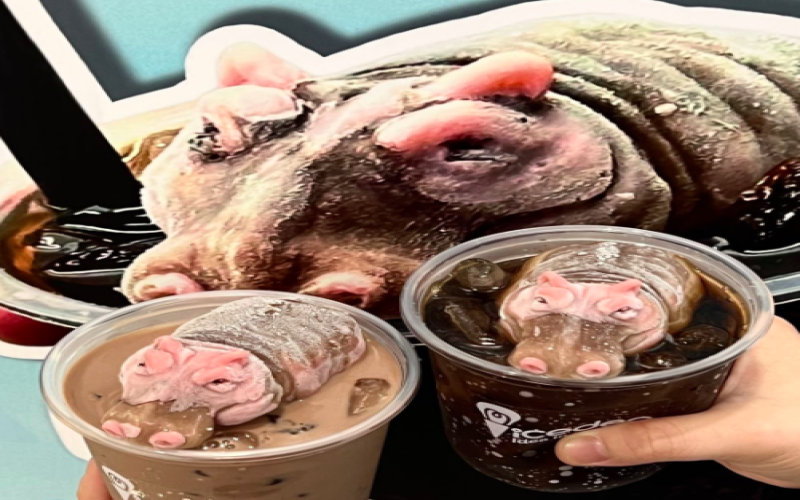
Thailand's Moo Deng coffee goes viral online: top star baby hippo Moo Deng becomes ice cream decoration, sparking heated discussion
Recently, a drink called "Hippo Coffee" has gone viral on social media, with many netizens traveling to Thailand specifically to check it out. This cup of coffee, priced at 99 Thai baht (about 21 RMB), doesn't taste particularly special compared to regular coffee—its highlight is a lifelike hippo-shaped ice cream lying on the surface of the liquid. This hippo isn't just a randomly designed cartoon figure; it's modeled after the hugely popular baby pygmy hippo "Moo Deng" (Bouncy Pig) at Thailand's Khao Kheow Open Zoo. However, this highly realistic hippo soaking in dark brown coffee has also led many netizens to exclaim that they "can't bear to take a bite." This article takes you behind the story of how this hippo coffee became a hit. [more…]
Natural Yirgacheffe Aricha G1 Flavor Analysis: A Complete Guide to Price, Roast Level, and Processing Method
Yirgacheffe has always been renowned for the clean floral aromas and citrus acidity of its washed processing method, while the natural processing method brings a completely different flavor profile to this classic region. Front Street Natural Yirgacheffe Aricha G1 is a prime example, displaying lively lemon-citrus acidity, apricot blossom and walnut aromas, along with spice notes of cinnamon and clove. On the palate, the honey-brown-sugar-like sweetness is soft and appealing, with a sweet-and-sour fruit tea sensation welling up in the finish. This article will provide a detailed introduction to this bean's flavor, price, roast level, and processing method, compare it with Front Street Blue Nile G1, and also outline the regional background of Yirgacheffe and the characteristics of garden coffee. [more…]
Three Coffee Documentaries to Watch: From the American Coffee Revolution to the World Barista Championship and a Chronicle of the Entire Coffee Supply Chain
According to data from the International Coffee Organization, 400 billion cups of coffee are consumed globally each year, with an average of 14,000 cups drunk every second. Calculated at retail prices, the annual output value of coffee has long exceeded 100 billion US dollars, so it is no exaggeration to call it a "black gold industry." Today, coffee is not just a pick-me-up beverage but also an expression of lifestyle taste. In China's first-tier cities, convenience store coffee, Starbucks, and independent cafes are almost everywhere. But have you ever wondered when coffee was discovered and how it transformed from a fruit into an everyday drink? This article recommends three coffee documentaries, focusing respectively on how coffee changed America, the journey of baristas competing in the World Barista Championship, and the complete industry chain from origin to cup, along with related recommendations from Front Street Coffee, to help you rediscover the cup of coffee in your hand. [more…]
Yunnan small-bean coffee doesn't taste good? Maybe you haven't mastered the correct roasting and brewing methods.
Many people's impression of Yunnan coffee is stuck at the stage of "it doesn't taste good enough," which actually has to do with the extensive planting methods of the early years and the fact that the beans were mainly supplied to instant coffee production lines. Today, with the support of local governments and the push of the specialty coffee wave, Yunnan coffee has undergone a qualitative leap from cultivation to post-processing, and producing areas such as Baoshan have already shown a unique regional flavor interwoven with plum, nut, caramel and tea notes. The Baoshan washed Catimor small-bean coffee selected by Front Street Coffee is grown at an altitude of over 1,200 meters, and through fine washed fermentation and medium roasting, it effectively weakens the greenish astringency of the variety itself, allowing the sweetness and cleanliness of Yunnan coffee to be fully expressed. This article will, from the origin background of this Front Street everyday-drinking bean, its green bean characteristics, roasting curve, to the three-stage pour-over parameters, fully explain how to correctly open a cup of Yunnan small-bean coffee. [more…]
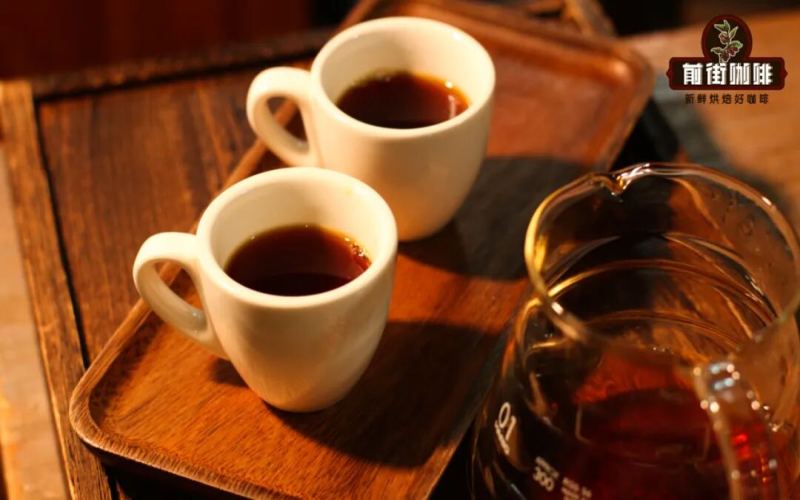
Pour-over coffee knowledge | Why doesn't the coffee bed puff up during blooming? Does a single-origin bean that doesn't puff up mean poor quality? Does a bigger coffee bed puff mean the coffee is fresher?
Whenever Front Street brews a pour-over for a customer's order, if the coffee bed puffs up quite a bit during blooming, there's a good chance the customer will ask: "Why doesn't my coffee bed puff up this much when I brew?" This is a topic Front Street often discusses! Honestly, although the bloom [more…]
Osmanthus Fragrance Dancong Oolong Gongfu Tea Brewing Guide: A Complete Analysis from Chaoshan Gongfu Tea to Everyday Drinking, with Rich Aroma and Golden Liquor
Osmanthus Fragrance Dancong is a category of oolong tea with particularly outstanding aroma. The finished tea has a golden and bright liquor color, with a rich floral fragrance and good durability for multiple infusions. To truly bring out its flavor, the brewing method of Chaoshan Gongfu Tea is worth understanding in depth. This article begins with the difference between Gongfu Tea and the Way of Tea, then sorts out the core utensils and key operating points of Chaoshan Gongfu Tea, including the pairing of a small clay stove, a Yixing pot or thin porcelain gaiwan, a tea boat, and small thin porcelain cups, as well as key details such as rapid pouring and brewing with living water. At the same time, drawing on Front Street Coffee's brewing experience, it helps readers understand how to use 6 to 8 grams of tea leaves and a small vessel of no more than 90 milliliters to complete a flash brew within 3 to 5 seconds, thereby obtaining a tea liquor with high aroma and a full-bodied mouthfeel. Whether you are a beginner who has just come into contact with Gongfu Tea or an enthusiast hoping to refine your technique, you can find practical ideas for reference here. [more…]
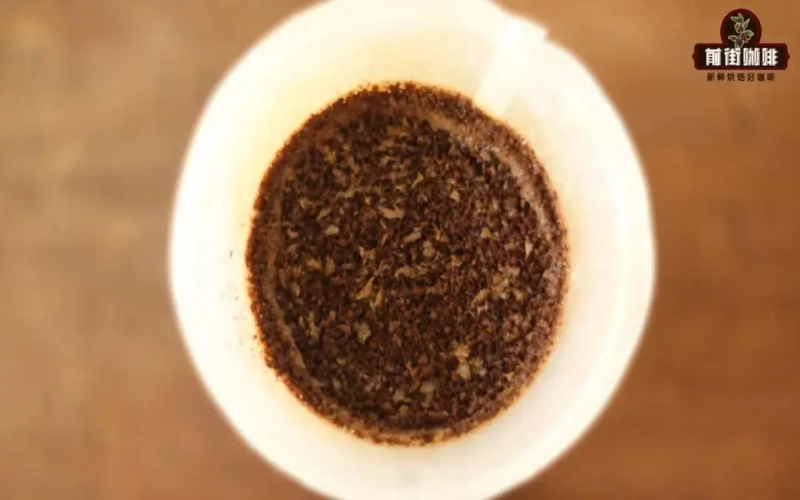
A flat coffee bed in pour-over brewing doesn't mean bad taste—revealing the causes of deep craters and three key points for brewing an even deep crater
Many friends who are just getting into pour-over coffee share a common misconception: they believe that the deeper and more even the coffee bed is, the better the coffee tastes. In reality, the shape of the coffee bed only reflects the pouring method and has no direct connection to coffee flavor. This article starts from a customer inquiry at Front Street's shop to explain why the coffee bed in specialty coffee is sometimes flat, and which factors truly determine coffee taste. It also shares three practical points: appropriately increasing the water flow, concentrating the hot water in the center, and choosing coffee beans that are not too high in density, helping you easily produce a symmetrical, deep coffee bed at home. The article also uses Front Street Yirgacheffe Gudingding, PWN Golden Mandheling, and others as examples to illustrate the differences in how various beans perform. [more…]

A video of a Chagee employee making tea with bare hands has sparked widespread discussion; official notice states the employee involved has been dismissed and the store has been ordered to suspend operations for rectification.
Recently, a video of a Chagee employee handling tea drinks with bare hands spread rapidly online, sparking widespread public concern about food safety issues at chain tea beverage brands. In the video, the employee, without wearing gloves, directly grabbed ice cubes and lemons and reached into a shaker cup to pound and stir the drink, prompting netizens to exclaim they were "disgusted." Although the poster explained that the footage was filmed after closing hours using damaged inventory to mimic the "Indian milk tea" meme, public opinion did not subside. Subsequently, netizens discovered that employees of several other brands, including Luckin Coffee, Yidian Dian, and Goodme, had also posted similar meme videos. Chagee officially issued an urgent investigation notice, imposing an indefinite suspension and rectification on the store involved, dismissing the employee involved, and demoting managerial personnel. This article will review the sequence of events and responses from all parties, and explore the boundary between food safety and entertainment-oriented marketing in the tea beverage industry. [more…]
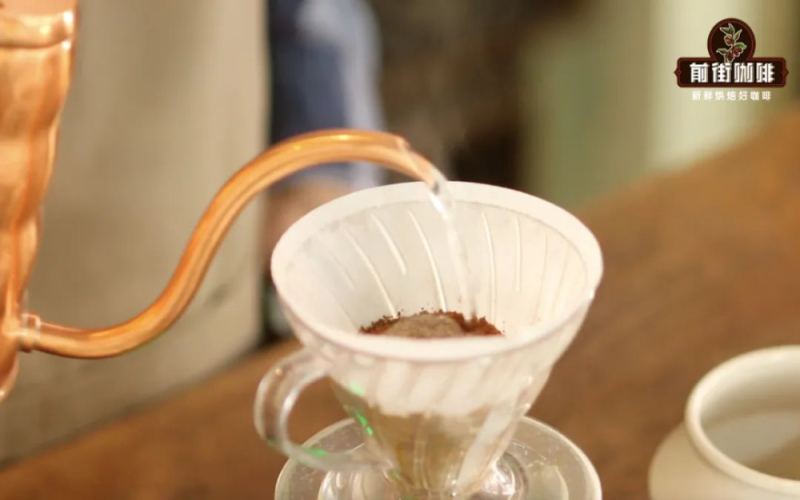
Why Doesn't the Coffee Bed Puff Up During the Bloom in Pour-Over Coffee? Analyzing the Three Key Factors Behind Coffee Bed Expansion
When the coffee bed doesn't bloom during a pour-over, many people take it as a direct sign that the beans aren't fresh—but the reality is far more complicated than that. Front Street Coffee believes that whether the bed expands can serve as a reference, but it shouldn't be relied on too heavily. Factors like roast level, grind size, and bean hardness all affect how much the bed puffs up during blooming. Dark-roasted beans often produce a full, domed "hamburger," while light-roasted beans—especially high-altitude Geisha—may only rise slightly or not at all, yet still deliver excellent flavor. This article breaks down these variables one by one to help you understand more accurately what's really behind blooming expansion, and avoid misjudging how fresh your coffee beans are. [more…]
Jamaica Stony Estate Blue Mountain Coffee Pour-Over Guide: Why It Doesn't Show Acidity and the Correct Brewing Method
Jamaican Blue Mountain coffee, as one of the earliest widely recognized specialty coffees in China, is renowned for its balanced and smooth taste. Only about 900 tons of premium Blue Mountain are exported each year, mainly from four major estates. This article takes Clifton Mount Estate as an example to explain in detail the cultivation, processing, grading, and transportation of Blue Mountain coffee, and focuses on the background of Stony Hill Estate. At the same time, Front Street will share the pour-over parameters and techniques for Blue Mountain No. 1, including key details such as the KONO dripper, 88°C water temperature, and three-stage pouring, to help you brew the classic Blue Mountain flavor that is not sour but mellow and balanced at home. [more…]

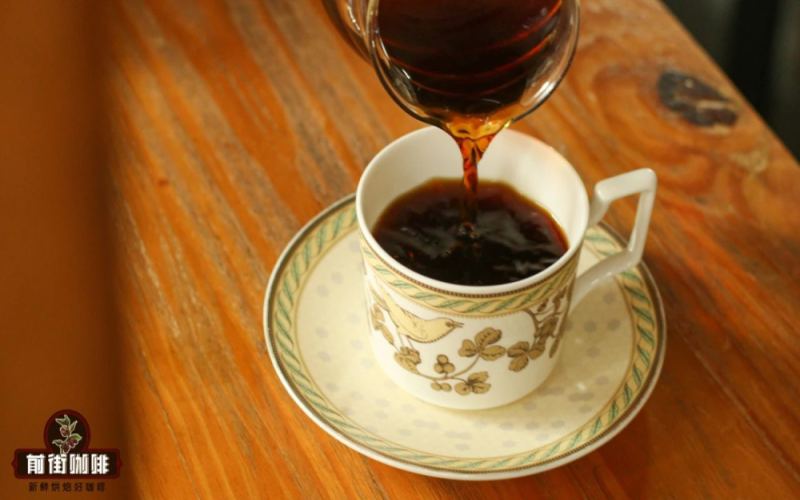
Why should you swirl the sharing pitcher after completing a pour-over coffee? How does this differ from the principle of decanting wine, and why doesn't it apply to espresso?
Many coffee enthusiasts have noticed that after finishing a pour-over, baristas pick up the sharing pitcher and give it a few shakes before pouring for the guest. What is the reasoning behind this action? Is it the same as decanting wine? This article uses measured data to reveal the real purpose of shaking pour-over coffee—to re-incorporate the different concentrations of coffee liquid extracted in stages back into a uniform mixture, rather than to release aromas as with decanting. It will also explain why espresso and lattes cannot be mixed by shaking and must instead be stirred. Front Street Coffee provides a complete brewing experiment and parameters in the article to help readers understand this operation from the perspective of concentration changes. [more…]
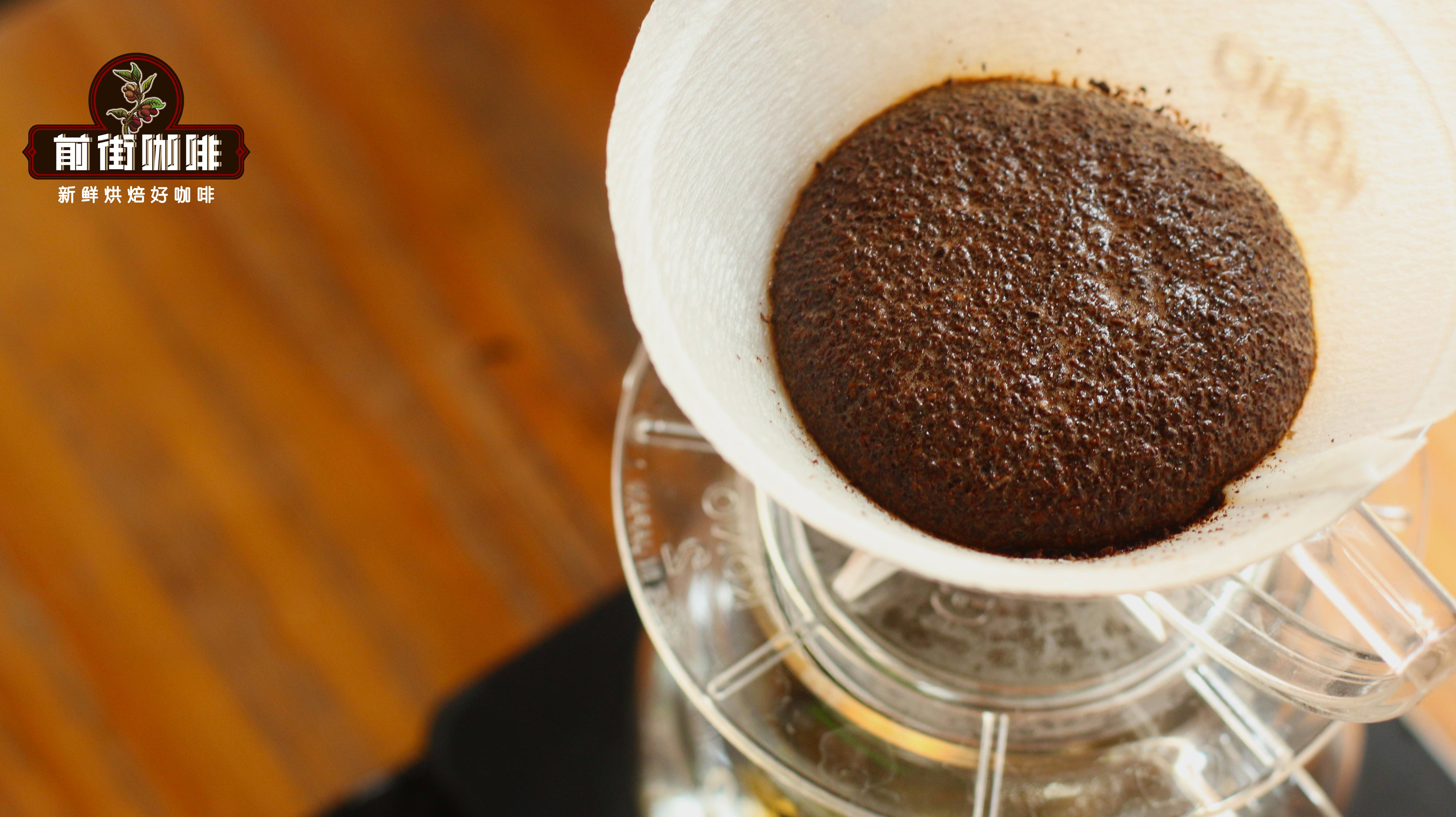
Why doesn't the coffee bed puff up during the bloom in pour-over? Understand the relationship between carbon dioxide and brewing parameters to easily achieve a full "hamburger" bloom
During a pour-over bloom, whether the coffee bed can puff up into a plump "hamburger" is a topic many enthusiasts care about. Some people use the same parameters yet always end up with a flat, deflated bed, and can't help wondering whether their bloom has failed. In fact, the principle behind the bed expanding isn't complicated: when coffee grounds contact hot water, they release carbon dioxide, and the bubbles accumulate within the bed, pushing it upward. Whether a pronounced dome forms mainly depends on the roast level and freshness of the coffee beans, as well as whether the brewing parameters are appropriate. Drawing on Front Street Coffee's brewing experience, this article breaks down the mechanism of bed expansion, explains the advantages of dark-roasted and fresh beans, while also cautioning about the extraction problems that overly fresh beans can cause, and offers recommendations on grind size, water temperature, and other parameters to help you read information about your coffee beans through the state of the bloom. [more…]
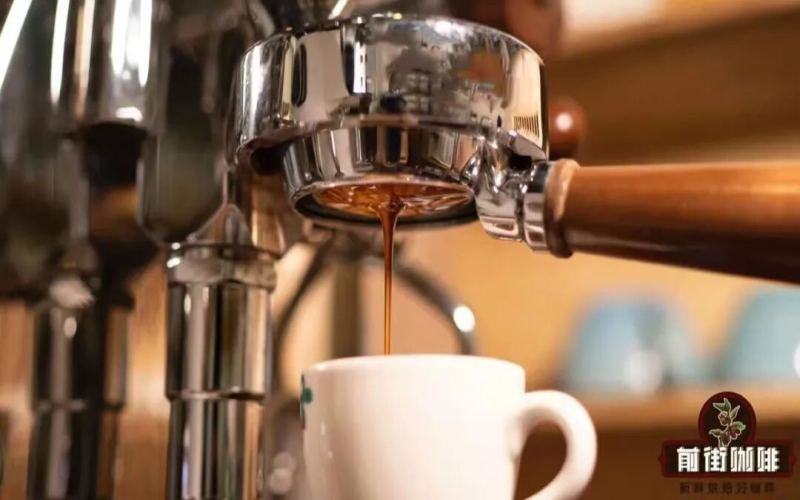
Latte | Why doesn't a homemade latte taste as good as one from a coffee shop? How do you make a standard Latte?
Today we're revisiting a familiar topic, because recently many friends took advantage of e-commerce promotions to buy coffee machines and start making coffee at home, only to find that the coffee they brew tastes completely different from what they expected. Even when using the same setup as Front Street Coffee's cafes, what they make just doesn't taste as good as what they drank in-store. [more…]
Why Doesn't Brazilian Coffee Have a NY1 Grade? A Full Analysis of the Cerrado Region's Flavor and Grading Standards
In the coffee-producing regions' grading systems, Brazil is a special case—its highest grade is not 1 but 2. Why does this happen? By what standards exactly are Brazilian coffees graded? Front Street Coffee takes you deep into Brazil's coffee grading system, breaking down the logic behind NY2 one by one, from defect rates and bean size to cup profile. We'll also discuss the flavor characteristics of coffee from Brazil's Cerrado region, and look at Front Street Coffee's daily drinking series—the Brazil Cerrado and the Front Street Coffee Brazil Queen's Farm Yellow Bourbon—to see how these two top-grade Brazilian coffees actually perform. [more…]

Why doesn't an 18g basket hold 18g of coffee grounds? A detailed explanation of espresso grind size and how to judge coffee ground coarseness
Many coffee enthusiasts have encountered this confusion when making espresso: they are using an 18-gram portafilter basket, yet it cannot hold 18 grams of coffee grounds, and after tamping, the portafilter is difficult to lock onto the group head. In this article, Front Street Coffee analyzes the delicate relationship between basket capacity and dose through a friend's personal experience, and explains the importance of the group head's raised structure and headspace. At the same time, the article will also share how to judge whether the espresso grind setting is appropriate based on the extraction state, as well as the correct way to assess coffee grind coarseness, helping you make stable espresso at home. [more…]